Risks of CCS
What are the risks of carbon capture, transport, and storage?
The short version
Every step of carbon capture and storage (CCS) has its own risks, and different people carry them. Capture risks fall mostly on the plant and its ratepayers. Transport risks fall on people who live near a pipeline. Storage risks fall on the people above and around the injection site, and eventually on the public. The money for most of it comes from taxpayers.
This page lists the risks that are documented, says who found them, and flags what is still unsettled. Supporters of CCS point out that pipelines are federally regulated, that storage wells are permitted and monitored under Class VI rules, and that capture can cut emissions from industries that are hard to clean up. Read both sides' filings and judge for yourself.
Risks of capture
Energy penalty. Running capture equipment takes a lot of energy. The University of Michigan case study says retrofitting a coal plant with capture can cut its power output by 20 to 40 percent, so more fuel must be burned to deliver the same electricity.
Source: University of Michigan Technology Assessment Project, Carbon capture and storage case study
Capture rates fall short. Smokestack capture systems catch a share of the CO2, not all of it. The same study puts typical systems at 50 to 90 percent, and says the Petra Nova coal project in Texas captured 3.8 million short tons of its promised 4.6 million before it shut down in 2020.
Source: University of Michigan Technology Assessment Project, Carbon capture and storage case study
What is left in the air. Whatever is not captured is still emitted, and the plant still produces other pollution. How much of a project's stated capture is real is worth asking about in any permit review.
Used to pump more oil. The same study reports that between 70 and 95 percent of captured carbon worldwide is used for enhanced oil recovery. That means the CO2 is injected to produce more oil, not only to be stored.
Source: University of Michigan Technology Assessment Project, Carbon capture and storage case study
Cost and reliability. Capture equipment is expensive to build and run. The study puts operating costs for smokestack capture at $40 to $60 per ton of CO2, with capital costs that can reach half a billion dollars or more. If a plant stops operating or capture drops, the project depends on public support to stay viable.
Source: University of Michigan Technology Assessment Project, Carbon capture and storage case study
Risks of transport (pipelines)
CO2 is an asphyxiant. CO2 is colorless, odorless and heavier than air, so a release can spread near the ground without warning. At high concentrations it displaces oxygen. Pipeline CO2 can also contain hazardous contaminants such as hydrogen sulfide.
Source: Congressional Research Service, CO2 pipeline safety (IN11944)
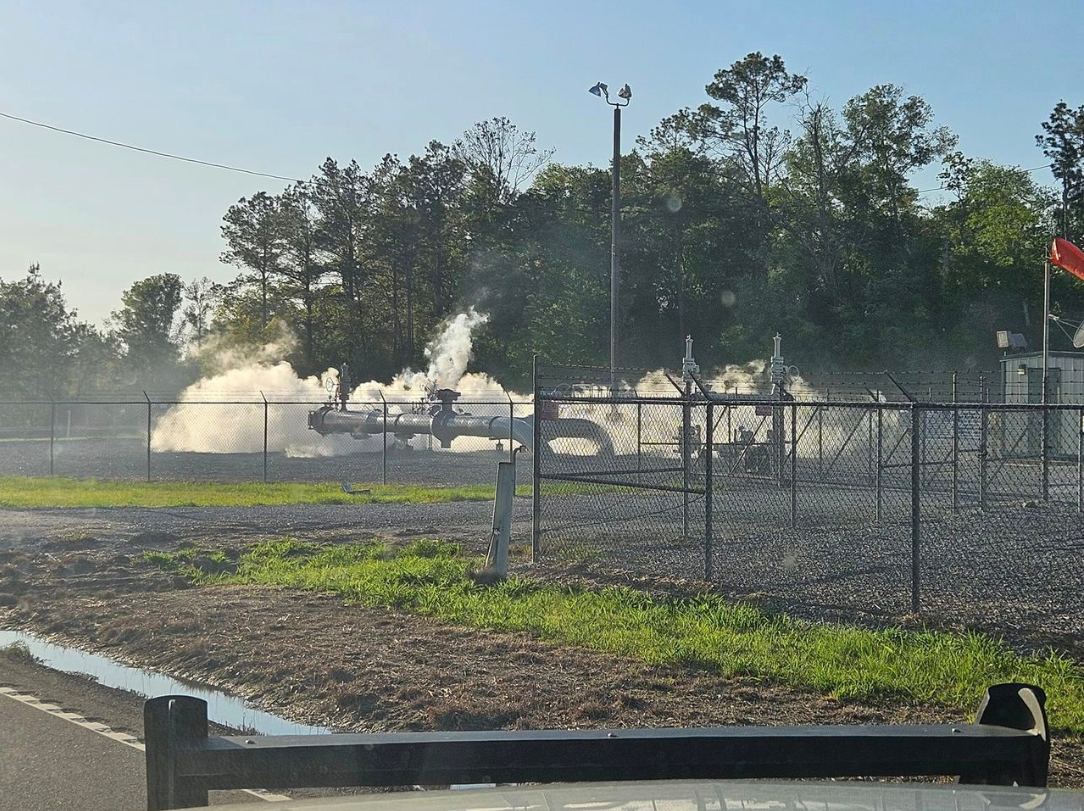
What happened in Satartia, Mississippi. On February 22, 2020, Denbury's 24-inch pipeline ruptured about a mile from Satartia. PHMSA found that heavy rain moved the soil and caused a girth weld to fail. Denbury reported 31,405 barrels released. The CO2 flowed downhill into the valley, about 200 people were evacuated, and 45 people were taken to the hospital. Responders first suspected a chlorine leak, and first contacted Denbury about 40 minutes after the rupture. Denbury had not notified local responders, and its dispersion model underestimated the area affected.
Source: PHMSA failure investigation report, Denbury Gulf Coast Pipeline (Satartia, 2020)
Penalties. PHMSA's investigation led to a notice of proposed violation with $3.9 million in proposed civil penalties, according to the Congressional Research Service.
Source: Congressional Research Service, CO2 pipeline safety (IN11944)
Rules are still catching up. About 5,000 miles of CO2 pipeline operate in the U.S., mostly built for oil recovery. One study cited by the Congressional Research Service estimates a national CCS network could reach 66,000 miles by 2050. Stakeholders have argued federal rules are insufficient on hazard zones, pipeline fractures and corrosion. PHMSA proposed a CO2 safety rule in 2025. Check its current status before you rely on it.
Source: Congressional Research Service, CO2 pipeline safety (IN11944); Jones Day, PHMSA proposed rule on CO2 pipelines (March 2025)
Ask your county. Local fire and emergency crews are the first to respond. Ask whether they have been trained for a CO2release, whether they have the equipment, and whether the company has shared its emergency plan and the area it expects a release could reach.
Risks of storage (sequestration)
Old wells can leak. Oil and gas fields often hold dozens or hundreds of abandoned wells. If any are poorly plugged, stored CO2 can move up them. The University of Michigan study names old wells as a leakage risk and says verifying long-term storage is expensive.
Source: University of Michigan Technology Assessment Project, Carbon capture and storage case study
Real examples of problems. At ADM's Decatur, Illinois site, a monitoring well leak was found in March 2024. EPA issued a notice of violation on August 14, 2024, over fluid moving into an unauthorized zone, and later a final order. EPA says it found no threat to drinking water sources.
Source: EPA, ADM Decatur Class VI enforcement
Pressure underground. Pumping fluid into rock raises pressure, which can move fluids and can reach faults. Permits are supposed to study faults and the surrounding area. Ask what the permit says about both.
Drinking water. A Class VI well is meant to be sited and monitored so injected CO2 and displaced salty water do not reach underground drinking water. Ask which aquifers lie above the formation, and where nearby water wells are.
Decades of monitoring. The federal default for monitoring after injection stops is 50 years, and operators can ask to shorten it. Problems may show up long after the company has moved on.
Who is liable when it is over. Under most state laws, responsibility passes from the company to the state after a set time. This is covered in the next section.
Cost to the taxpayer
The 45Q tax credit. Section 45Q pays for each metric ton of CO2 captured and stored. Under the 2025 law, a project that meets prevailing wage and apprenticeship rules gets $85 per ton for geologic storage and, for projects placed in service after July 4, 2025, the same $85 per ton for enhanced oil recovery. Before that law, enhanced oil recovery was $60. Direct air capture is $180 per ton. Without the wage rules, the base credits are $17 per ton ($36 for direct air capture). The credit can be claimed for 12 years.
Source: Congressional Research Service, The Section 45Q Tax Credit (IF11455); Taxpayers for Common Sense, 45Q fact sheet (updated July 2025)
What it costs. The U.S. Treasury estimated the 2022 expansion at $36.2 billion for fiscal years 2024 to 2033. The Joint Committee on Taxation estimated the 2025 law adds another $14.2 billion for fiscal years 2025 to 2034, largely because of the higher oil recovery credit. Both figures are as reported by Taxpayers for Common Sense, an advocacy group that opposes these subsidies, so check them against the original estimates.
Source: Taxpayers for Common Sense, 45Q fact sheet (updated July 2025)
Oversight concerns. According to Taxpayers for Common Sense, operators can self-certify how much they capture and store, with no third-party check. It also says nearly $1 billion in claims from 2010 to 2019 failed EPA monitoring and reporting requirements, and that the full investigation results were never made public. In September 2025, EPA proposed repealing the Greenhouse Gas Reporting Program, which the IRS uses to verify claims.
Source: Taxpayers for Common Sense, 45Q fact sheet (updated July 2025)
Credits are mostly secret. The IRS does not publish 45Q credits by company or state, because tax returns are confidential. The public usually cannot see who has claimed how much.
Long-term liability can land on the public. Most states take over responsibility for a closed site after a set number of years. Per the Payne Institute: Indiana after 10 years, Louisiana after 10 (capped at its trust fund), North Dakota after 10, Wyoming after 20 (capped at its trust balance), Montana after 30, Texas immediately after injection stops, and Kansas not at all. Operators pay a per-ton fee into a trust, generally $0.07 to $0.10 per ton, to cover future problems. If damage costs more than the trust holds, the state, and so the taxpayers, would be left with the difference. The authors expect the fees to be enough, but call that an assumption.
Source: Payne Institute, Colorado School of Mines, Long-term stewardship and liability
Public money before the credit. Governments also pay for permit reviews, inspections, emergency response, roads and monitoring, and in some projects grants and loans. These costs are rarely added up in one place, so ask your state and county.
Questions to ask about any project
Who inspects the capture equipment, and how is the amount captured verified?
Is the pipeline route near homes, schools, rivers or valleys where a release could pool?
Has the company shared its emergency plan with our county's first responders?
How many old wells lie within the area of review, and who checked them?
Which aquifers are above the storage formation?
When does the state take over liability here, and what does the trust fund hold?
How much 45Q credit is the project expected to claim, and over how many years?
Sources
University of Michigan Technology Assessment Project, Carbon capture and storage case study
Congressional Research Service, CO2 pipeline safety (IN11944)
PHMSA failure investigation report, Denbury Gulf Coast Pipeline (Satartia, 2020)
Jones Day, PHMSA proposed rule on CO2 pipelines (March 2025)
Congressional Research Service, The Section 45Q Tax Credit (IF11455)
Taxpayers for Common Sense, 45Q fact sheet (updated July 2025)
Payne Institute, Colorado School of Mines, Long-term stewardship and liability
General information, not legal or financial advice. Figures are as reported by the sources listed, which are linked.