What is CCS?
carbon capture and storage (and transport)
The short version
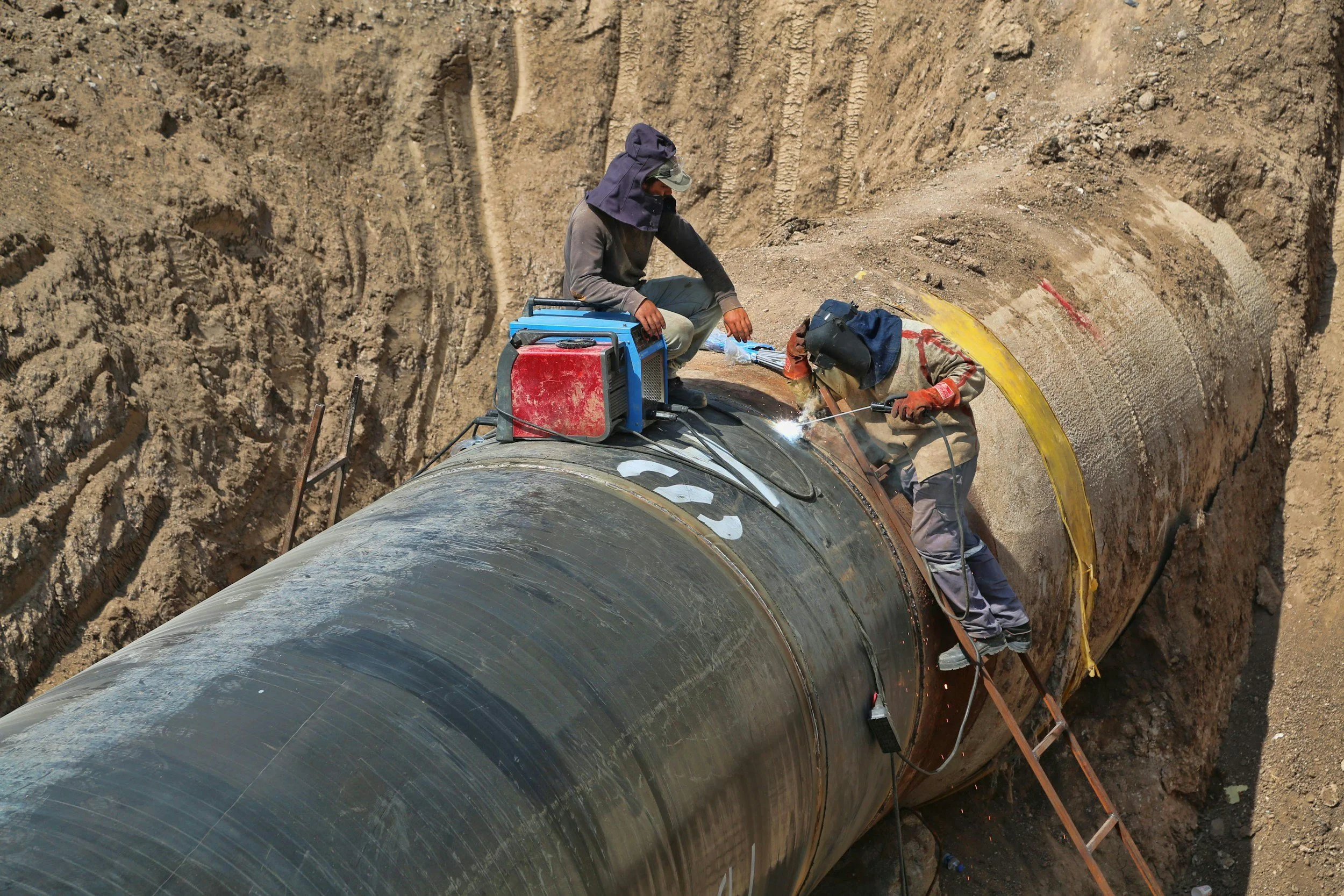
Carbon capture and storage (CCS) is a way of catching CO2 gas at an industrial site, such as an ethanol plant, fertilizer plant, gas processor or power plant, and putting it deep underground instead of letting it go into the air. Because most capture sites are far from places where the gas can be stored, CCS usually depends on new CO2 pipelines, often hundreds of miles long, crossing farms, ranches and towns.
Supporters say CCS cuts emissions and helps industry. Many landowners and neighbors ask who carries the risks, who owns the underground space, and whether the land can be taken for a private project. This page explains the terms so you can read permits, easements and news stories for yourself.
How it works, in four steps
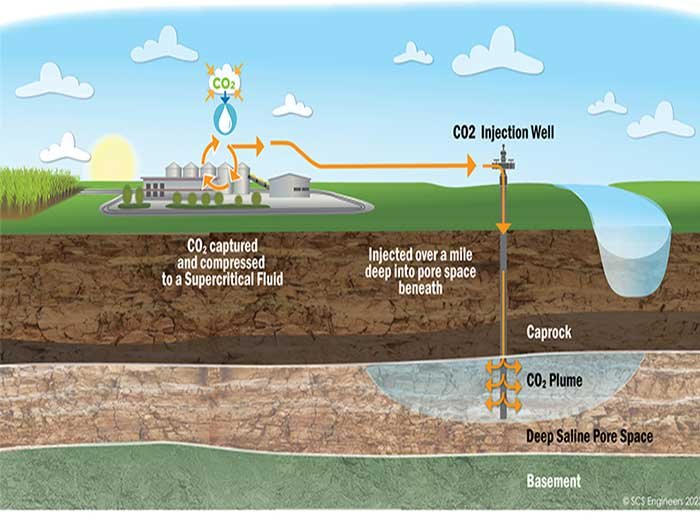
Capture. CO2 is separated from the exhaust or process stream at a plant.
Compress. The gas is squeezed under high pressure until it behaves like a dense fluid (often called supercritical or dense-phase CO2), which is easier to move.
Transport. The CO2 travels by pipeline, and sometimes by truck, train or ship, to a storage site.
Inject and store. It is pumped down a well into a rock layer thousands of feet below the surface, where it is meant to stay permanently.
Why landowners pay attention
Pipelines need a right-of-way (an easement) across private land. Some states let pipeline companies use eminent domain, and others do not or have limited it.
Storage needs the underground rock space. Who owns it, and whether it can be combined with neighbors' land without their consent, is decided by state law and differs from state to state.
A federal tax credit, called 45Q, pays companies per ton of CO2 captured and stored. That money is a big reason many of these projects are being built.
Glossary: words you will see in permits and news
Carbon capture and storage (CCS)
Capturing CO2 from an industrial source and storing it underground. You may also see CCUS (the U adds "use") and CCS shortened to "sequestration."
Geologic sequestration
Storing CO2 deep in rock layers for the long term.
Class VI well
The federal category for wells that inject CO2 underground for long-term storage. Class VI is one of six well classes under the Underground Injection Control (UIC) program, created under the Safe Drinking Water Act. A Class VI permit sets rules for where the well can go, how deep it is, how much can be injected, and how it is monitored.
Class II well
A different category, mostly for oil and gas wastewater and for injecting CO2 to push out more oil (see enhanced oil recovery). Class II is not the same as a Class VI storage permit.
Primacy
A state taking over Class VI permitting from the U.S. EPA. States with primacy run their own permit process. As of mid-November 2026 these include North Dakota, Wyoming, Louisiana, West Virginia, Arizona and Texas, and Colorado's takes effect November 12, 2026. Other states are in progress. Check EPA's current list before you publish.
Underground source of drinking water (USDW)
An underground water supply, or one that could be used for drinking. Class VI wells are supposed to be sited and monitored so injected CO2 does not reach one.
Saline formation
A deep layer of porous rock filled with salty water that cannot be used for drinking. It is the most common target for storage.
Pore space
The tiny gaps inside deep rock, like the holes in a sponge, where injected CO2 is stored. A storage company needs the right to use that space. The owner is usually the surface owner, but in some states it is the mineral owner. Ohio's 2026 law, for example, treats the surface and water owner as the pore space owner. A pore space lease is the contract that gives a company that right, and payment may be a one-time sum or a fee per ton injected. Some states also let a company combine many owners' pore space without everyone's consent (see unitization).
Unitization (or amalgamation)
Combining many owners' pore space into one storage unit. Many states let a storage operator proceed once a set share of owners (for example 60 to 70 percent) agrees, binding the rest. Rules vary by state.
Area of review (AoR)
The area around an injection well that regulators study because the CO2 and pressure could reach it. Old wells in that area must be found and checked.
Plume
The underground spread of injected CO2. It can move and grow over time.
MRV (monitoring, reporting and verification)
The ongoing measuring and reporting an operator does to show the stored CO2 is staying put.
Post-injection site care
Monitoring after injection stops. The federal default is 50 years, and operators can ask to shorten it.
Financial responsibility
Money an operator must set aside (insurance, bonds or trust funds) to cover plugging wells, monitoring and fixing problems.
Enhanced oil recovery (EOR)
Injecting CO2 into oil fields to produce more oil. Some CO2 stays underground, but the purpose is oil production.
Supercritical CO2
CO2 held above its critical point, about 88°F and about 1,070 psi. Past that point it is neither a normal gas nor a normal liquid: it fills a pipe like a gas but is dense like a liquid.
Dense phase CO2
CO2 kept at high pressure so it is dense, like a liquid, which lets a pipeline move far more of it. Pipelines keep it at pressure the whole way, so a break can release a large amount quickly.
psi (pounds per square inch)
A measure of pressure. A car tire is around 35 psi. CO2 pipelines are typically run at well over 1,000 psi. When you read a pipeline's "maximum allowable operating pressure" (MAOP), it is given in psi.
Asphyxiant
A gas that harms by pushing out the oxygen in the air. CO2 is an asphyxiant, and at high concentrations it also affects the body directly, causing dizziness, unconsciousness and death. It is colorless and odorless, so people may not notice it.
Emissions
Gases released into the air, such as CO2 from burning fuel or from an industrial process. CCS aims to reduce the emissions that reach the air from a plant, but capture equipment does not catch everything, and powering it can add emissions.
Capture
The first step of CCS: separating CO2 from the other gases a plant produces so it can be compressed and sent away. How much is caught is called the capture rate, and is stated as a percent.
Permit
Government permission to build or operate something, with conditions. One project can need several, such as a Class VI well permit, a state pipeline siting permit, and air and water permits. Permits usually have public comment periods, so check each agency's notices.
Injection
Pumping CO2 down a well into rock. The amount allowed, in tons per year, and the maximum pressure are set in the permit.
Easement
A recorded legal right for someone else to use part of your land for a stated purpose, such as running a pipeline. You still own the land, but the easement usually stays with it when it is sold. Terms to read: width, what is allowed, payment, damage repair, who can use it, and how it ends.
Right-of-way (ROW)
The strip of land the pipeline occupies and the company controls, usually 50 feet or more wide while it is permanent, plus extra temporary workspace during construction. Often used to mean the easement itself.
Temporary workspace
Extra land used only during construction for equipment and soil storage. It is usually covered by a separate payment and a set end date.
Right of entry (survey access)
Permission for a company's surveyors to walk your land before a route is chosen. Some states let companies enter with notice. Others require your consent. Know the rule in your state.
Landowner agreement
The contract you sign with a company. It can be an easement, a pore-space lease, a surface use agreement, or an option. Once signed and recorded, it binds you and later owners. Ask what each page gives away before you sign.
Voluntary easement (voluntary agreement)
An easement you agree to without being forced. Terms can be negotiated: payment, route, depth, crop damage, drainage tile repair, and what happens if the line is abandoned. Signing one can also weaken a later argument that the project is not wanted, so talk to a lawyer first.
Compensation and damages
Payment for the easement itself (often per rod or per foot) and for harm such as crop loss, soil compaction and broken drain tile. Ask what is covered now and what is covered in future years.
Setback
The minimum distance a pipeline, well or equipment must keep from homes, schools, property lines, water wells or other features. Setbacks can come from state law, county rules or company practice. Many places have none for CO2 pipelines, so check your state and county.
Abandonment
What happens when a line is no longer used. Some easements say the company must remove the pipe, others let it be left in the ground. Ask for this in writing.
Surface owner vs. mineral owner
Land can be split so one person owns the surface and another owns the oil, gas or minerals underneath. This can affect who has to be asked about pore space and who gets paid, depending on the state.
Eminent domain (condemnation)
The power to force a land sale or easement for a public use, in exchange for "just compensation." Condemnation is the court process that does it. States disagree on whether and when a private CO2 pipeline can use it, and an owner can usually challenge the taking or the payment in court.
Common carrier
A pipeline legally required to carry anyone's product, not just its owner's. In some states, only common carriers can use eminent domain, so this label can decide whether land can be taken.
PHMSA
The federal Pipeline and Hazardous Materials Safety Administration. It sets safety rules for CO2 pipelines and keeps the national pipeline map.
45Q tax credit
A federal tax credit under Section 45Q of the tax code for each metric ton of CO2 captured and stored. Credit amounts depend on how the CO2 is used or stored. Individual company claims are generally not published because of tax confidentiality.
Compressor station
A facility that boosts pipeline pressure and keeps the product moving. It can be loud and can vent gas during maintenance or emergencies.
Leak and release
CO2 is colorless and odorless and heavier than air, so a release can collect in low ground and push out oxygen. A 2020 pipeline rupture in Satartia, Mississippi sent people to the hospital. Ask your county what its emergency plan is.
Questions to ask about any project
Is the line or well already permitted, still proposed, or on hold? Who approved it?
Is the pipeline a common carrier? Does this state allow eminent domain for it?
How is the pore space owned here, and can my neighbors' agreement bind me?
What does the Class VI permit require for monitoring, financial responsibility and emergency response?
Is there an aquifer or drinking water well near the route or the injection site?
This page is general information and not legal advice. Easement and condemnation rules differ by state.